Beyond “Family Honor”: Documenting the Killings of Women and Girls in Iran
By:Rezvan Moghaddam
A Research-Based Report on Gender-Based and Honor-Related Killings During Shahrivar, Mehr and Aban 1405
Stop Honor Killings Campaign (SHK)
Reporting period: Shahrivar–Aban 1405 (approximately August 23–November 21, 2026)
Updated through November 19, 2026
Abstract
The killing of women and girls in Iran remains a persistent and deeply rooted human rights violation, occurring within a social, legal and institutional environment marked by gender inequality, patriarchal control, discriminatory laws and insufficient protection against domestic and gender-based violence.
This report documents 85 cases recorded by the Stop Honor Killings Campaign (SHK) during Shahrivar, Mehr and Aban 1405, covering approximately three months from late August to November 2026. The dataset includes 84 entries extracted from the Campaign’s monitoring database and one additional case, the killing of 23-year-old Sadaf Haghbin, reported during the preparation of this report.
The documented cases reveal recurring patterns of killings perpetrated by husbands, fathers, brothers, sons, former husbands, intimate partners and other relatives or acquaintances. Several cases involve women who sought divorce, rejected marriage proposals, attempted to end relationships, or were subjected to violence in the name of family honor. The documentation also includes children killed within family settings and cases involving child marriage.
This report examines the monthly distribution, geographical patterns, relationships between victims and perpetrators, reported motives and circumstances of the killings. It also highlights the cases of Sougand Sayadi, a 16-year-old girl reportedly killed by her father following the disclosure of her sexual orientation by her school principal, and Sadaf Haghbin, a 23-year-old woman killed by her former intimate partner after reportedly rejecting his marriage proposal.
The Campaign emphasizes that the documented cases represent reported and recorded incidents, not the total number of killings in Iran. The absence of transparent official statistics, restrictions on independent investigation, incomplete media reporting and discrepancies in available sources significantly limit the ability to establish the actual scale of these crimes.
1. Introduction
Violence against women and girls in Iran is not limited to isolated incidents or individual criminal behavior. It is embedded in a broader system of gender inequality in which women’s autonomy, freedom of choice, sexuality, marriage, divorce and personal relationships are frequently subjected to family and societal control.
Killings committed by husbands, fathers, brothers, former partners and other relatives are often described in official or media narratives as “family disputes,” “personal conflicts” or incidents involving “honor.” Such descriptions risk obscuring the gendered nature of these crimes and the underlying mechanisms of coercion, domination and violence.
The Stop Honor Killings Campaign uses the term honor killing to describe murders committed under the pretext of defending family reputation, patriarchal notions of honor, or controlling women’s and girls’ behavior, sexuality and relationships.
However, not every killing recorded in the Campaign’s database can be conclusively classified as an honor killing. Some cases have incomplete information regarding motive, while others involve different forms of gender-based violence, domestic violence, intimate-partner violence or criminal circumstances.
This report therefore distinguishes between the broader documented killings of women and girls and cases in which honor-related motives are explicitly reported or identified in the available documentation.The objective is to identify patterns, document individual cases, and expose the structural conditions that enable violence against women and girls to persist.
2. Methodology and Scope
This report is based primarily on the Stop Honor Killings Campaign’s database of documented killings in Iran during Shahrivar, Mehr and Aban 1405.
The database contains information, where available, on:
- Victim names and ages;
- Names or identities of alleged perpetrators;
- Relationships between victims and perpetrators;
- Province, city and locality;
- Date or approximate date of the incident;
- Reported methods of killing;
- Reported motives;
- Additional circumstances and relevant information;
- Sources used for documentation.
The Campaign monitors reports published by Iranian media, human rights organizations, local sources and other available channels. Cases are documented and reviewed based on the information accessible at the time.
Reporting period
The reporting period covers:
- Shahrivar 1405: approximately August 23–September 22, 2026;
- Mehr 1405: approximately September 23–October 22, 2026;
- Aban 1405: approximately October 23–November 21, 2026.
The report includes cases documented up to November 19, 2026, including the newly reported killing of Sadaf Haghbin.
Limitations
The documentation has several limitations:
- Some cases have incomplete information regarding victims’ names, ages, locations or perpetrators.
- Some entries concern multiple victims in a single incident.
- Certain sources provide conflicting information about victims’ ages, locations or the relationship between victims and alleged perpetrators.
- In some cases, the date recorded is the date of publication or discovery rather than the confirmed date of death.
- Some reported motives have not been independently verified or confirmed by official investigations.
- The Campaign’s documentation reflects reported cases and should not be interpreted as the total number of killings during the reporting period.
The Campaign does not consider these limitations a reason to disregard the cases. Rather, they demonstrate the need for transparent official statistics, independent investigations and stronger mechanisms for documenting gender-based violence.
3. Overview of Documented Cases
During the three-month reporting period, the Campaign documented:
| Month | Recorded cases |
| Shahrivar | 18 |
| Mehr | 44 |
| Aban | 23 |
| Total | 85 |
The figure for Aban includes the killing of Sadaf Haghbin, reported on November 19, 2026, during the preparation of this report.
The number of documented cases increased sharply in Mehr compared with Shahrivar, followed by a lower but still significant number of recorded cases in Aban.
The monthly distribution should not be interpreted as a definitive measurement of the actual incidence of killings. It may also reflect differences in media coverage, accessibility of information, reporting practices and the Campaign’s monitoring process.
Nevertheless, the number of recorded cases demonstrates the continuing and alarming frequency of killings of women and girls in Iran.
Monthly distribution
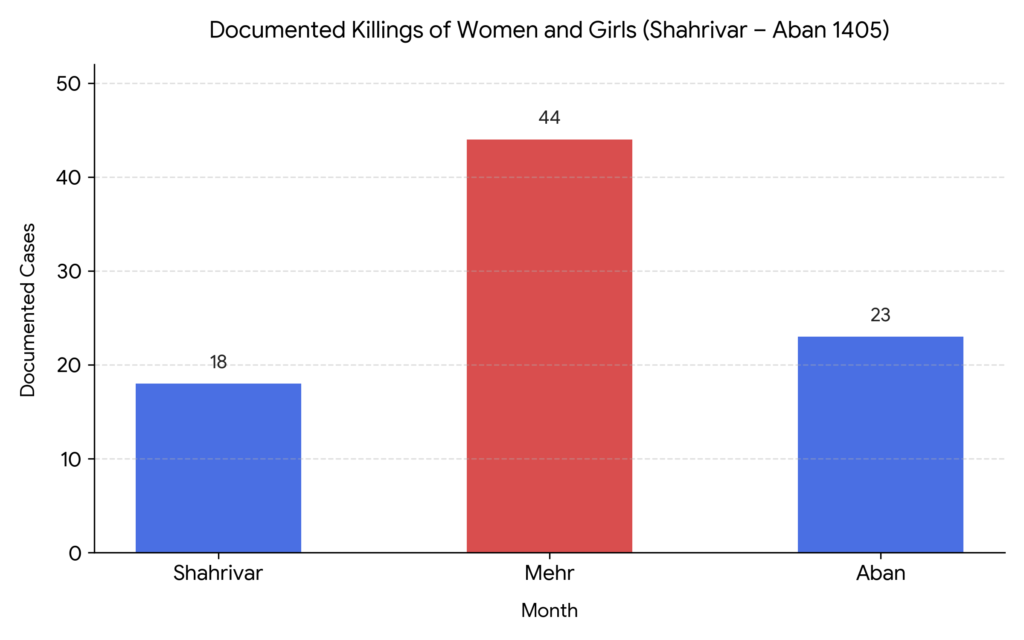
Figure 1. Documented killings recorded by the Stop Honor Killings Campaign during Shahrivar, Mehr and Aban 1405. Total: 85 recorded cases.
The increase from 18 recorded cases in Shahrivar to 44 in Mehr represents a substantial increase in documented cases. Aban recorded 23 cases.
These figures indicate an urgent need for continued monitoring, but they cannot establish the actual monthly incidence of killings without complete and independently verified national data.
4. Relationship Between Victims and Perpetrators
The relationship between victims and alleged perpetrators provides important insight into the nature of violence against women and girls.
The Campaign’s database identifies husbands and fathers as the most frequently recorded relationships. Other perpetrators include brothers, sons, former husbands, sons-in-law, brothers-in-law, intimate partners and other relatives or acquaintances.
The documented cases demonstrate that women and girls are often killed by people who have access to them through intimate, familial or social relationships.
Main relationship categories
The following chart groups the principal relationship categories recorded in the database. Categories are consolidated for analytical presentation; the original records contain some overlapping or differently worded relationship descriptions.
Data Breakdown
| Relationship | Recorded Cases | Share of Total (%) |
| Husband | 27 | 29.0% |
| Other / acquaintance / partner | 13 | 14.0% |
| Father | 10 | 10.8% |
| Unknown or unidentified | 7 | 7.5% |
| Brother | 6 | 6.5% |
| Son | 5 | 5.4% |
| Former husband | 5 | 5.4% |
| Son-in-law | 5 | 5.4% |
| Close relatives | 4 | 4.3% |
| Brother-in-law | 3 | 3.2% |
| Total | 85 |
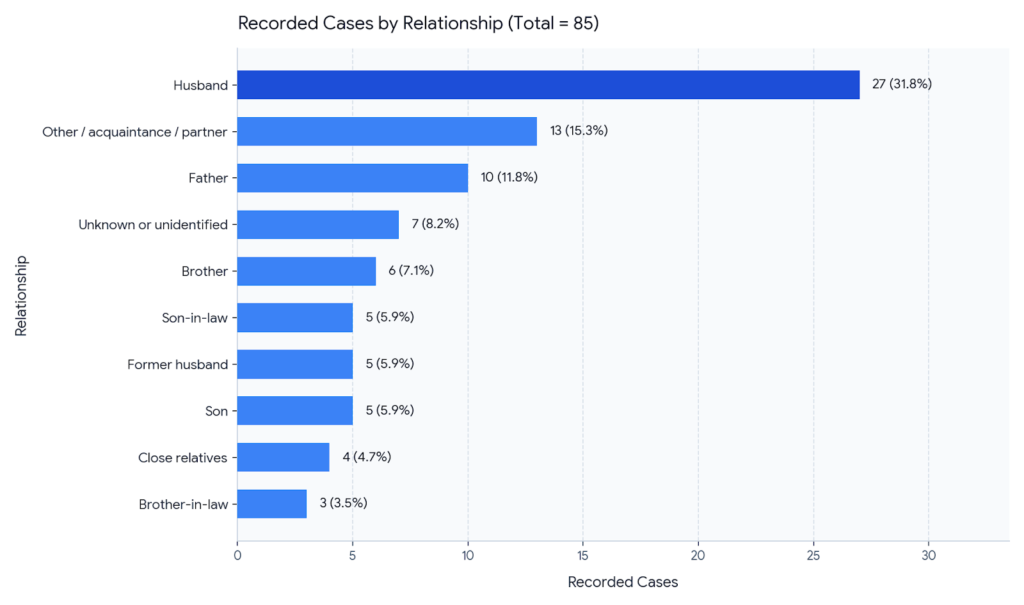
Figure 2. Relationship categories among documented cases. Categories are consolidated from the Campaign’s database and may include cases with multiple perpetrators or victims.
The predominance of husbands and fathers highlights the significance of intimate-partner violence and family-based violence in the killing of women and girls.
These patterns also demonstrate that the family cannot automatically be assumed to be a safe environment for women and girls. In many documented cases, family members or intimate partners are the perpetrators of violence.
Data Interpretation
- Dominant Single Category: Husband accounts for the largest share of recorded cases with 27 cases (31.8% of the 85 total cases), which is more than double the next highest specific category (Father with 10 cases, or 11.8%).
- Partners & Acquaintances: Combining Husband (27) and Former husband (5) equals 32 cases (37.6%), while Other / acquaintance / partner adds another 13 cases (15.3%), showing that current/former partners and acquaintances make up a large share of the dataset.
- Family & Relatives: Father (10), Brother (6), Son (5), and Son-in-law (5) total 26 cases (30.6%), while Close relatives (4) and Brother-in-law (3) add 7 cases (8.2%).
- Unknown / Unidentified: Unknown or unidentified accounts for 7 cases (8.2%), ranking fourth overall.
- Summary Statistics: Across the 10 categories, the mean is 8.5 cases (median 5.5, standard deviation 7.15, minimum 3, maximum 27), with Son, Former husband, and Son-in-law tied at 5 cases (5.9%) each.
5. Geographical Distribution
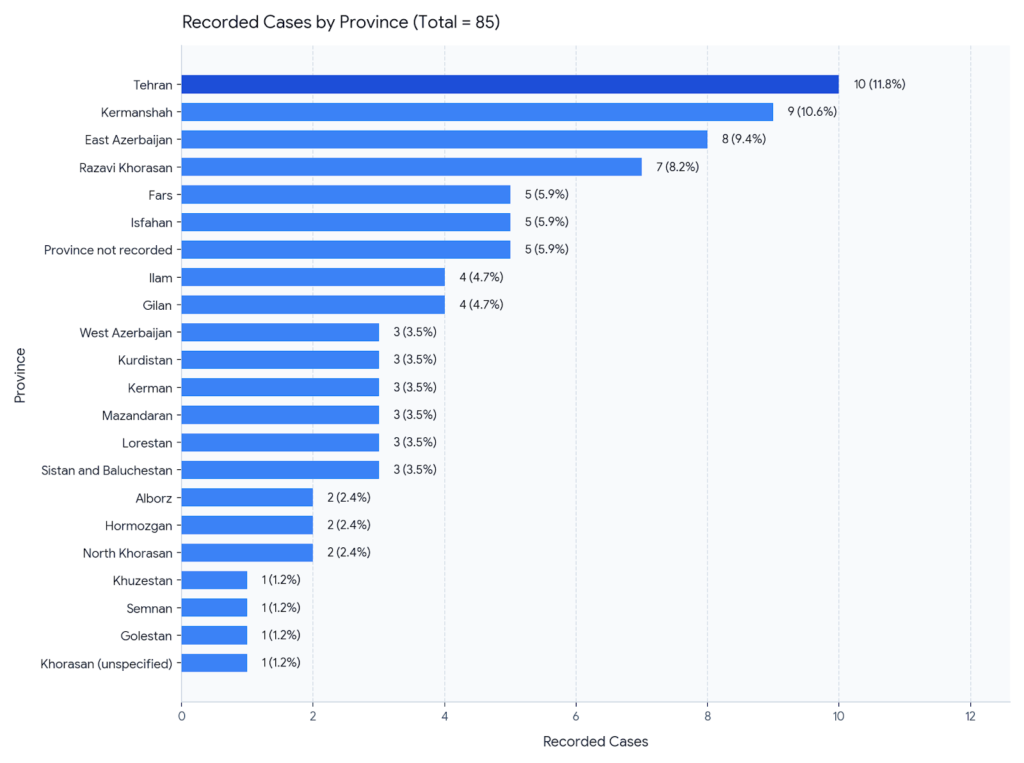
The documented cases occurred across multiple provinces, demonstrating that killings of women and girls are not confined to a single region or community. The highest numbers of recorded cases were associated with Tehran, Kermanshah, East Azerbaijan and Razavi Khorasan. The geographical distribution also reflects the limitations of the Campaign’s documentation. Some records identify only a city or locality rather than a province, while others lack precise location information.
Recorded Cases by Province (Total = 85)
| Province | Cases | Share (%) |
| Tehran | 10 | 11.8% |
| Kermanshah | 9 | 10.6% |
| East Azerbaijan | 8 | 9.4% |
| Razavi Khorasan | 7 | 8.2% |
| Fars | 5 | 5.9% |
| Isfahan | 5 | 5.9% |
| Province not recorded | 5 | 5.9% |
| Ilam | 4 | 4.7% |
| Gilan | 4 | 4.7% |
| West Azerbaijan | 3 | 3.5% |
| Kurdistan | 3 | 3.5% |
| Kerman | 3 | 3.5% |
| Mazandaran | 3 | 3.5% |
| Lorestan | 3 | 3.5% |
| Sistan and Baluchestan | 3 | 3.5% |
| Alborz | 2 | 2.4% |
| Hormozgan | 2 | 2.4% |
| North Khorasan | 2 | 2.4% |
| Khuzestan | 1 | 1.2% |
| Semnan | 1 | 1.2% |
| Golestan | 1 | 1.2% |
| Khorasan (unspecified) | 1 | 1.2% |
| Total | 85 | 100.0% |
Distribution by province
6. Honor-Related Killings and Patriarchal Control
Honor-related killings are a particularly extreme manifestation of patriarchal violence. They occur when individuals are killed because their behavior, relationships, sexuality, marriage decisions or perceived transgressions are considered to have violated family or social expectations.
The cases documented by the Campaign indicate that the notion of honor is frequently associated with:
- Rejection of marriage proposals;
- Attempts to end intimate relationships;
- Requests for divorce;
- Suspected or actual relationships outside the expectations of family members;
- Sexual orientation or perceived sexual identity;
- Family control over women’s and girls’ choices;
- Opposition to forced or child marriage;
- Claims of protecting family reputation.
Honor is not an inherent attribute of women. The concept is often used as a mechanism through which patriarchal systems claim authority over women’s bodies, sexuality, relationships and autonomy.
The Campaign rejects the framing of these killings as legitimate responses to alleged moral violations. No family member, partner or relative has the right to punish or kill a woman or girl for exercising her autonomy.
Cases with explicitly recorded honor-related motives
The database contains cases in which honor-related motives were explicitly recorded, including:
- Fatemeh Nazari, 29, Khorramabad, Lorestan Province, reportedly killed by her husband in a firearm attack. The database identifies an honor-related motive.
- Ruhollah Sepahvandkia, a male victim in the same incident, recorded as the intimate partner of the alleged perpetrator’s spouse.
- An unidentified 53-year-old woman, Nishapur, Razavi Khorasan Province, reportedly killed by her husband through strangulation. The database records an honor-related motive.
- Nesa Alizadeh, 16, Khoy, West Azerbaijan Province, reportedly strangled by her father. The database records an honor-related motive.
- Sougand Sayadi, 16, Kermanshah Province, reportedly killed by her father. The database identifies the motive as honor-related and connected to her sexual orientation.
The Campaign emphasizes that the absence of an explicitly recorded honor-related motive does not necessarily mean that patriarchal control or gender-based violence played no role in a killing. Motives may remain unreported, disputed or concealed.
7. Violence Following Divorce Requests and Rejection of Relationships
A recurring pattern in the documented cases is violence against women who attempt to exercise their right to choose their relationships, reject marriage proposals or leave abusive relationships.
The database includes several cases in which requests for divorce or rejection of marriage were recorded as relevant circumstances:
- Zahra Zeynoldini, 32, Zarand, Kerman Province: her request for divorce and her husband’s opposition to her decision were recorded.
- Zeynab, 27, Tehran: reportedly killed by a former fiancé or intimate partner following her rejection of marriage.
- Sepideh Reisi, 22, Jahrom, Fars Province: reportedly killed by her husband; her request for divorce was recorded.
- Fatemeh Behzadi, 34: recorded as killed by her husband after seeking divorce.
- Leila Goli, 30, Shahin-Dezh, West Azerbaijan Province: reportedly killed by her former husband.
- Maryam, 45, Tehran: reportedly killed by her husband; the database records conflict surrounding divorce and the husband’s desire to marry another woman.
These cases reveal the danger faced by women when they attempt to exercise autonomy within intimate relationships.
The right to leave a marriage or relationship should never expose a woman to threats, coercion or lethal violence.
The absence of effective protection orders, emergency shelters, accessible legal assistance and timely intervention mechanisms can leave women at serious risk, particularly when perpetrators have a history of threats, coercive control or violence.
8. Child Victims and Child Marriage
The Campaign’s documentation includes killings of children within family settings, as well as cases involving girls subjected to child marriage.
The deaths of Rosa, 14, Hadith, 9, and Radbin, 9, in Dehloran, Ilam Province, alongside their mother Fereshteh Yousefzadeh, 38, represent one of the most alarming cases recorded during the reporting period.
The database records the mother as killed by her husband and the children as killed by their father or stepfather using a firearm.
Other cases include:
- Yeganeh Hosseinzai, a teenage girl reportedly killed by her cousin, who was also her husband. The case is associated with child marriage.
- Sougand Moshtareki, reportedly killed by her husband in Arzuiyeh, Kerman Province. The database notes that she had been subjected to child marriage and was the mother of an infant.
- Sougand Sayadi, 16, whose killing raises concerns about discrimination, violence against children and the failure of institutions to protect vulnerable students.
Child marriage places girls in situations of unequal power, often exposing them to sexual violence, domestic violence, coercion, social isolation and severe restrictions on their autonomy.
The Campaign considers the protection of girls from child marriage and family violence an essential component of preventing killings of women and girls.
9. Case Study: Sougand Sayadi, 16
Discrimination, Educational Failure and the Killing of a Child
The killing of Sougand Sayadi, a 16-year-old girl, is a particularly disturbing case illustrating the intersection of family violence, discrimination based on sexual orientation, violations of children’s privacy and the failure of educational institutions to protect students.
According to information documented by the Stop Honor Killings Campaign, the school principal reportedly disclosed information concerning Sougand’s sexual orientation to her father.
Following this disclosure, her father, Kiumars Sayadi, reportedly threw her from the fifth floor of a building, causing her death.
The Campaign’s database records the motive as honor-related and connected to her sexual orientation.
This case raises serious questions about the responsibility of educational institutions to protect students’ privacy, dignity, safety and fundamental rights.
A school should be a safe environment for children. It should not become a place where sensitive personal information is disclosed in ways that expose students to discrimination, threats, violence or potentially lethal consequences.
The reported disclosure of Sougand’s sexual orientation to her father raises concerns about professional responsibility, confidentiality, child safeguarding and the absence of effective procedures to assess and prevent foreseeable risks to students.
Her killing must also be understood within the broader context of discrimination against LGBTQ+ individuals and the normalization of patriarchal control over girls’ lives.
The case demonstrates how the failure of protective institutions, combined with discriminatory social attitudes and family violence, can have devastating consequences.
The Campaign calls for an independent investigation into the circumstances surrounding Sougand’s death, including the reported disclosure by the school principal, and for accountability where negligence, misconduct or violations of child protection obligations are established.
Sougand was a child whose right to life, privacy, dignity and safety should have been protected.
10. Case Study: Sadaf haghbin, 23
Murder Following Rejection of Marriage
During the preparation of this report, the Campaign received information about the killing of Sadaf Jahanbin, a 23-year-old woman, in Khomam, Gilan Province.
According to reports published on November 19, 2026, Sadaf was killed on November 18, 2026, during a birthday gathering.
Reports indicate that her former intimate partner entered the gathering armed with a hunting rifle and forced attendees into another room. He reportedly confronted Sadaf and pressured her to contact her family and declare that she loved him and wanted to marry him.
When Sadaf reportedly rejected his demand and stated that she did not want to marry him, he allegedly beat her and shot her, killing her.
The police reportedly confirmed the murder and the arrest of the alleged perpetrator. The official police account referred to a shooting involving a hunting rifle and described the incident as arising from personal conflict. Media reports attributed the alleged motive to Sadaf’s rejection of marriage, although this motive has not been independently established through a judicial finding.
The case illustrates the lethal consequences of coercive control and the refusal to accept women’s decisions regarding marriage and intimate relationships.
A woman’s rejection of marriage is not an offense. Her refusal to continue or begin a relationship cannot justify violence, intimidation or murder.
Sadaf’s killing is a tragic reminder that violence against women frequently occurs when men attempt to assert control over women’s choices and autonomy.
Sources: IranWire’s report published on November 28, 1405, and other reports published on November 19, 2026, including the police account of the killing and arrest. The victim’s surname appears with differing spellings in some reports; the Campaign records her name as Sadaf Haghbin.
11. Legal and Institutional Context
The persistence of killings of women and girls must be examined in the context of the legal and institutional framework of the Islamic Republic of Iran.
The Campaign has repeatedly raised concerns about provisions of the Islamic Penal Code that may reduce accountability for certain family-related killings or create legal defenses and mitigations in circumstances involving claims of honor.
In particular, Articles 301, 612 and 630 of the Islamic Penal Code require scrutiny regarding the protection of victims and accountability for perpetrators.
Article 301 concerns conditions relating to retribution for murder; Article 612 addresses certain circumstances in which retribution is not imposed; and Article 630 addresses a specific claimed justification involving a husband who witnesses his wife in sexual relations with another man.
These provisions must be examined within the broader context of gender inequality, discriminatory family laws and the state’s failure to provide equal and effective protection to women and girls.
Legal reform alone is insufficient without institutional change, independent monitoring, effective protection services and public education challenging the notion that family honor can justify violence.
12. Recommendations
The Stop Honor Killings Campaign calls for the following measures:
1. Independent and effective investigations
All killings of women and girls must be investigated independently, impartially, transparently and effectively. Authorities must examine prior threats, coercive control, domestic violence, requests for divorce and honor-related motives.
2. Accountability for perpetrators
Perpetrators must be held accountable without discrimination or legal exemptions based on family relationships, claims of honor or patriarchal notions of ownership.
3. Reform of discriminatory laws
The Iranian authorities must review and amend provisions of the Islamic Penal Code and other laws that contribute to impunity or fail to provide equal protection for women and girls.
4. Protection for women seeking divorce or leaving relationships
Effective protection orders, emergency shelters, legal assistance, psychosocial support and accessible reporting mechanisms must be made available to women at risk.
5. Prevention of child marriage
The authorities must establish and enforce a minimum marriage age of 18 without discriminatory exceptions and ensure that girls have access to education, protection and support.
6. Protection of children and LGBTQ+ individuals
Educational institutions must respect confidentiality, prevent discrimination and establish effective safeguarding mechanisms. Children must not be exposed to violence because of their actual or perceived sexual orientation or gender identity.
7. Transparent official statistics
The government must publish comprehensive and reliable statistics on killings of women and girls, including victims’ ages, locations, relationships to perpetrators, motives, methods of killing, legal outcomes and prior reports of violence.
8. Support for independent documentation
Independent civil society organizations and human rights defenders must be allowed to document killings, investigate patterns of violence, support survivors and families, and report violations without intimidation or obstruction.
13. Conclusion
The 85 cases documented by the Stop Honor Killings Campaign during Shahrivar, Mehr and Aban 1405 demonstrate the continuing and alarming pattern of killings of women and girls in Iran.
The documented cases reveal recurring violence by husbands, fathers, brothers, sons, former partners and other relatives or acquaintances. They also demonstrate the dangers faced by women who seek divorce, reject marriage proposals or attempt to exercise autonomy over their intimate relationships.
The cases of Sougand Sayadi and Sadaf Jahanbin illustrate two particularly disturbing manifestations of gender-based violence.
Sougand’s killing raises grave concerns about discrimination, the violation of children’s privacy, the responsibility of educational institutions and the failure to protect a child at risk.
Sadaf’s killing demonstrates the lethal consequences of coercive control and the refusal to accept a woman’s right to reject marriage.
These cases must not be dismissed as private family matters or isolated criminal incidents. They are manifestations of structural gender inequality and violations of fundamental human rights.
The Stop Honor Killings Campaign emphasizes that the documented figures represent only the cases recorded by the Campaign during the reporting period. They do not constitute a comprehensive national count of killings in Iran.
The Campaign will continue its documentation and monitoring activities. A subsequent report will provide comprehensive information and statistical analysis covering all cases recorded throughout 1405, including further examination of geographical distribution, perpetrators, motives, victim profiles and patterns of honor-related violence.
Every documented case represents a life lost. Every name matters. Every killing demands accountability.
A woman is nobody’s honor.
Stop Honor Killings Campaign (SHK)
Documentation, Research and Advocacy for the Prevention of Honor-Related Violence and Killings